How education, Mentorship and Artificial Intelligence Can Help Build a Better Future for Youths in South Africa.
by Carren Mandina
Student Contributor | SCINEi Essay Competition 2026
Honourable judges. My name is Carren Mandina, a Grade 7 learner at Mokopane English combined school. Although I have different career paths in mind, I am currently most interested in becoming a doctor. One teacher who has inspired me is Ma’am J.Lombard. She is the most patient and funniest teacher I have seen. She has always believed in me and taught me to never give up when learning becomes a challenge. Her attitude towards others is always gentle and playful. I would like to nominate my teacher because of her kindness and positive approach that have inspired me and other learners.
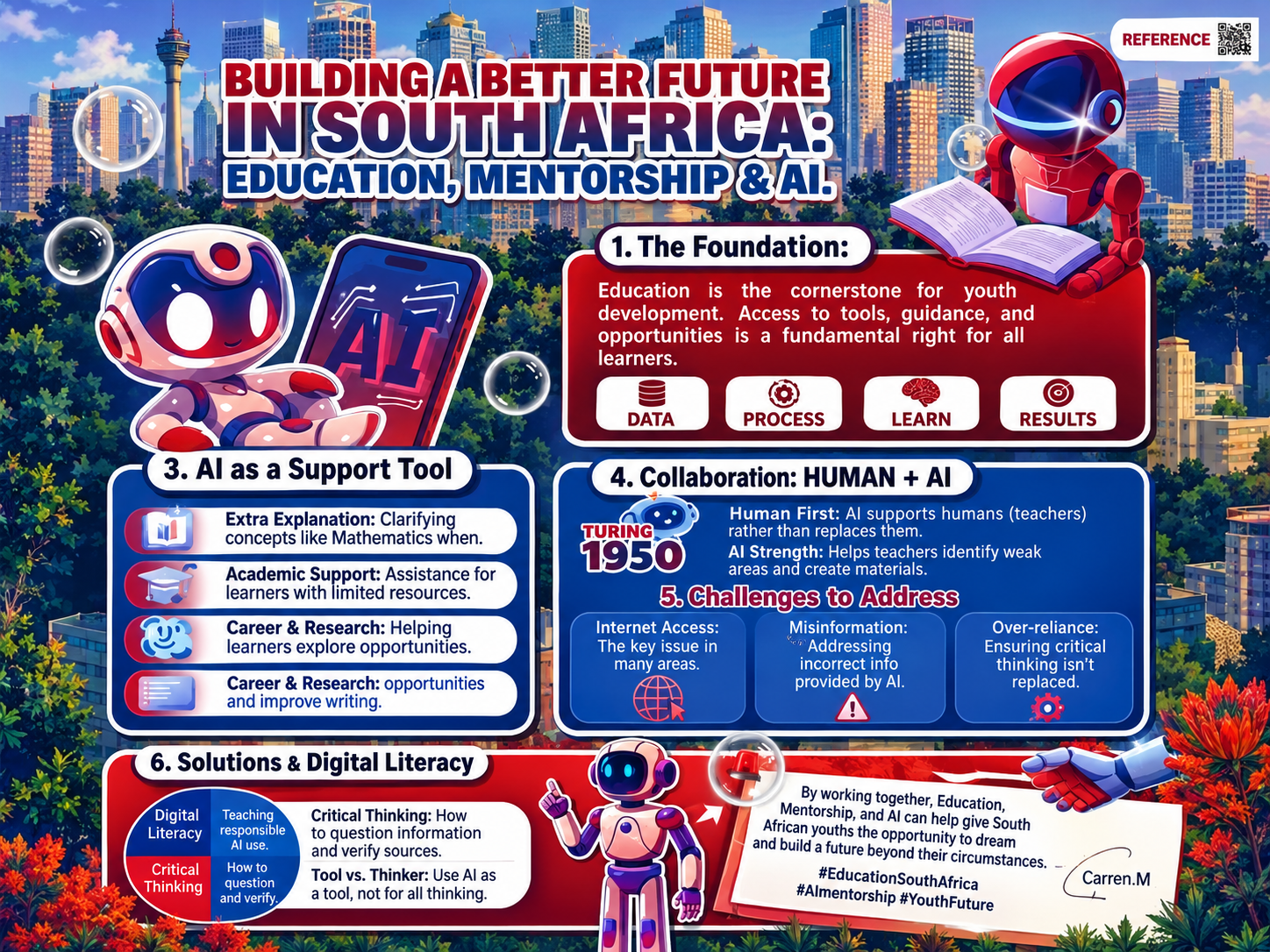
It's important to realise everyone learns at a different pace. I have also realised in our community, not everyone has access to education. I believe that every learner has the right to access the tools, guidance and opportunities they need to succeed, regardless of their circumstances. Artificial intelligence could become one of the tools that helps us move closer to that goal.
Artificial intelligence is a field of computer science that enables machines to perform tasks that normally require human intelligence. Although AI shouldn't replace a teacher, it can support both teachers and learners. A learner who does not understand a mathematical concept, for example, could use an AI tool to receive another explanation. AI could also help learners research careers, improve their writing and discover educational resources. For learners who have limited access to extra academic support, responsible access to AI could provide another source of assistance.
However, technology alone can't build a better future. Education remains the foundation. This is where mentorship becomes important. A mentor is an experienced advisor who gives insight to a less experienced person. If more young people in South Africa had access to education, it could develop a future of more opportunities. We could help develop a generation that is not afraid to dream beyond its circumstances.
AI could strengthen mentorship. Not every time will a teacher be available for guidance, so AI can provideadditional explanations and practice while the learner waits for human guidance and help teachers create learning materials and identify weak areas. AI should therefore support human beings rather than replace them.
However, there's challenges we must address. Not every learner has internet access. AI may provide misinformation, and learners may depend on it too much. The solution isn't to simply give young people AI and expect it to solve every educational problem. We must teach digital literacy, responsible AI use and critical thinking alongside access to technology. Learners should know how to question information, verify sources and use AI as a learning tool rather than allowing it to do all their thinking for them.
In conclusion, education, mentorship and artificial intelligence each have an important role in helping young people build a better future. In South Africa, where many young people still face unemployment, these tools worktogether to make a difference. Education can prepare learners for their future, mentors can guide them through challenges, and AI can provide extra support when it is used responsibly. By working together, they can help give youths the opportunity to learn, grow and build a future beyond their circumstances.