PROTECTING WITHOUT EXCLUDING: BUILDING COMMUNITIES THAT SAFEGUARD THE VULNERABLE
by Tiragalo Gwebu
The Tension Between Protection and Participation
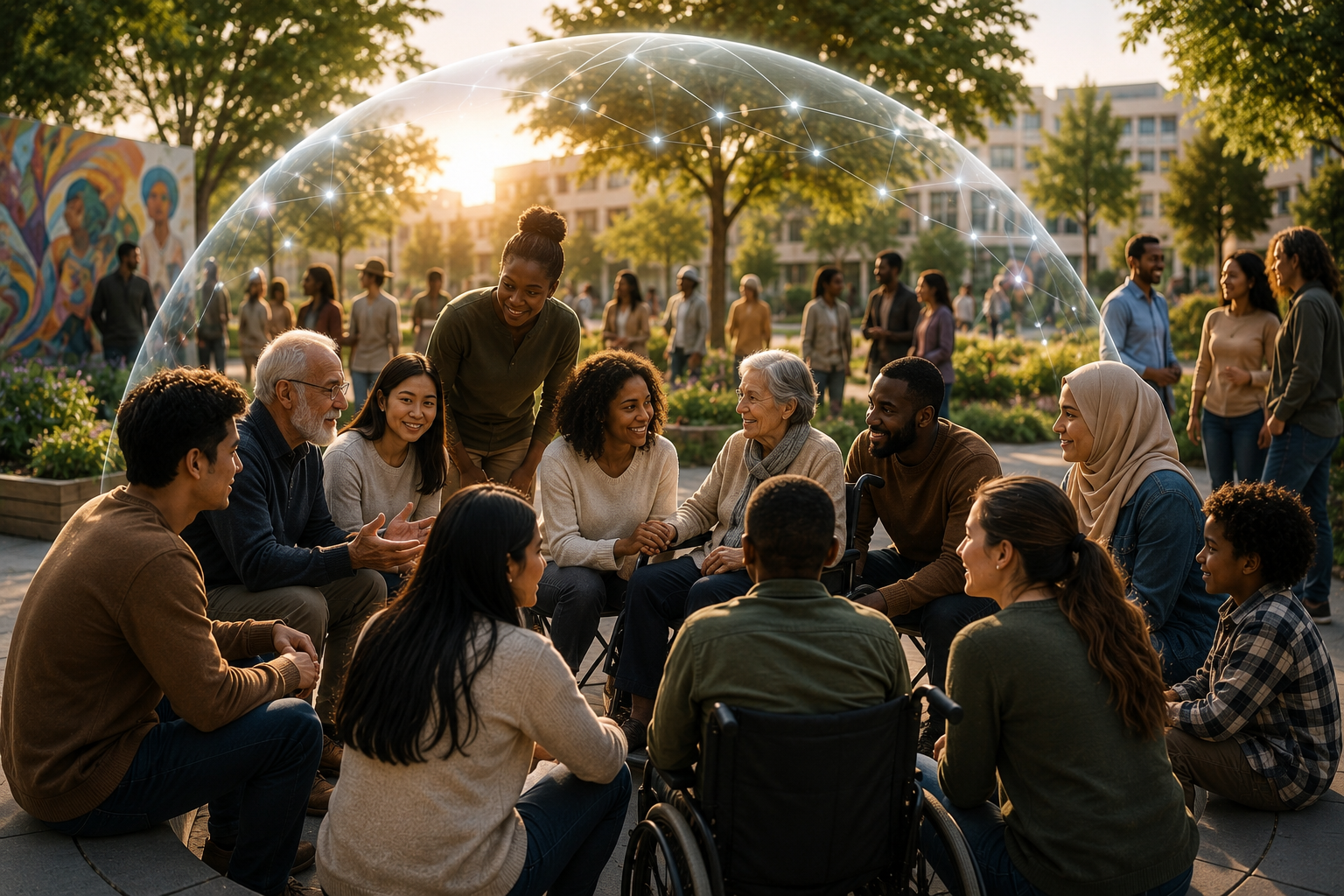
Every society faces a difficult political question: how can it protect vulnerable people without isolating them from the very communities they belong to? History shows that protection can sometimes become paternalism, where individuals are treated as perpetual recipients of care rather than active participants in public life. On the other hand, complete freedom without support often leaves those facing hardship exposed to exploitation and neglect. Political philosophy has long wrestled with this balance, exploring how justice can preserve both dignity and security. Aristotle argued that the purpose of the political community is to cultivate human flourishing, while modern thinkers such as Martha Nussbaum emphasize creating conditions in which every person can develop their capabilities. Protection, therefore, should never reduce a person's agency but should strengthen their capacity to contribute. Communities flourish when they refuse to choose between compassion and responsibility. The challenge is not simply protecting people, but designing institutions that allow protection to become a pathway toward participation rather than dependence.
Building Systems Instead of Emergency Responses
Many governments and communities respond to vulnerability only after crises emerge. Food relief, temporary shelters, emergency healthcare, or disaster assistance are necessary, yet they are rarely sufficient on their own. Political philosophy encourages us to ask deeper questions about institutional design rather than isolated interventions. Well-designed systems reduce vulnerability before it develops into crisis by investing in education, preventative healthcare, community policing, social cohesion, and economic opportunity. This shift moves society from reacting to problems toward cultivating resilience. Strong systems also distribute responsibility across families, schools, civil society, businesses, and government instead of placing the burden on one institution alone. The most stable societies are those where protection is woven into everyday civic life rather than reserved for emergencies. Lasting justice is therefore built through institutions that anticipate human need while preserving human dignity.
Participation as the Foundation of Human Dignity
Communities become healthier when vulnerable people are not viewed merely as beneficiaries but as contributors to the common good. Inclusion requires more than access to services; it requires opportunities to participate in decision-making, education, employment, volunteering, and community leadership. Political theorists increasingly recognise participation as an essential element of justice because people develop dignity through meaningful responsibility. Mentorship programmes, community advisory councils, youth leadership initiatives, and local volunteer networks all create spaces where individuals grow while strengthening the communities around them. Rather than asking what society can do for vulnerable people, we should also ask what conditions enable them to exercise their gifts. Participation transforms dependence into partnership. A just political order therefore measures success not only by how many people it protects, but also by how many people it empowers to serve others.
Trust as Public Infrastructure
Physical infrastructure such as roads, electricity, and communication networks receives significant political attention, yet societies also depend upon an invisible infrastructure: public trust. Communities where neighbours trust one another, institutions act transparently, and leaders demonstrate integrity are better equipped to respond to crises without social fragmentation. Trust reduces fear, encourages cooperation, and strengthens democratic participation. When citizens believe institutions exist for the common good, they become more willing to contribute to civic life. Conversely, corruption, secrecy, and inconsistent leadership erode the very foundation upon which protection depends. Building trust therefore requires ethical leadership, accountable governance, open communication, and consistent service delivery. Political communities are sustained not only by laws and policies but by relationships of confidence between citizens and institutions. Protecting the vulnerable ultimately depends upon protecting trust itself.
Toward Communities That Flourish Together
The future of governance lies not in choosing between protection and freedom but in integrating both within well-designed civic systems. Communities flourish when safety, participation, responsibility, and dignity reinforce one another rather than compete. This requires leaders who think beyond short-term political cycles and citizens who recognise that social wellbeing is a shared responsibility. Institutions should be designed to remove barriers without removing personal agency. Public policy should strengthen families, neighbourhoods, schools, and civic organisations so that protection becomes a collective practice rather than a bureaucratic function. The ultimate measure of a healthy society is not simply how it treats its strongest members, but how it enables its most vulnerable citizens to become active participants in the common good. Protection reaches its highest purpose when it prepares people not merely to survive, but to flourish alongside everyone else.